
Street Lamps and Signs

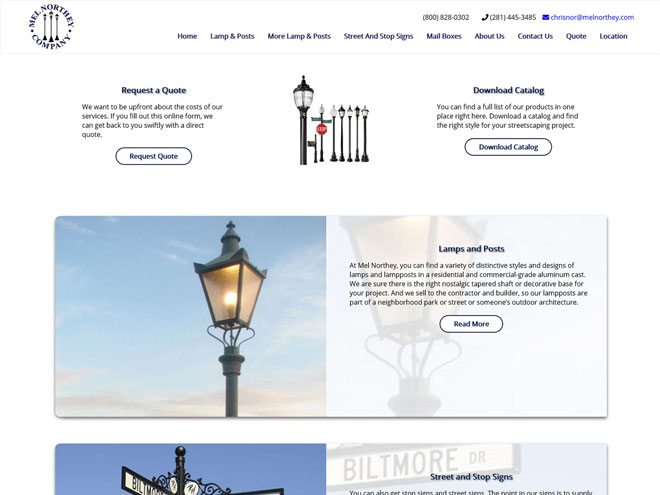
Street lamps and signs designed for the North American market. A Houston-based reseller offers original designs and products. The website emphasizes a catalog experience with well-organized categories, brief specifications, and consistently visible quote buttons that help buyers move from discovery to a scoped request with fewer clicks.

About Website

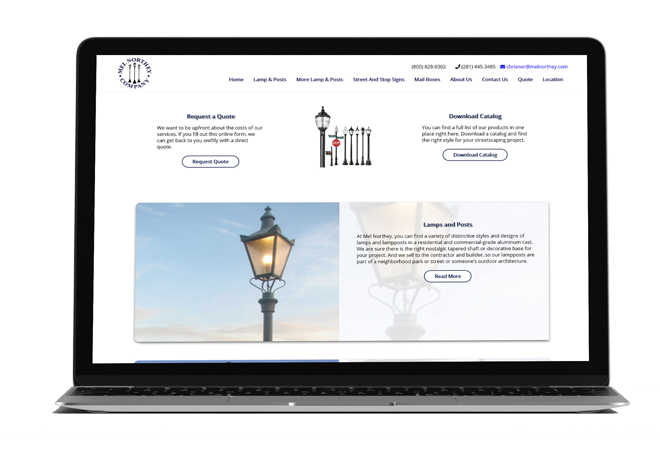
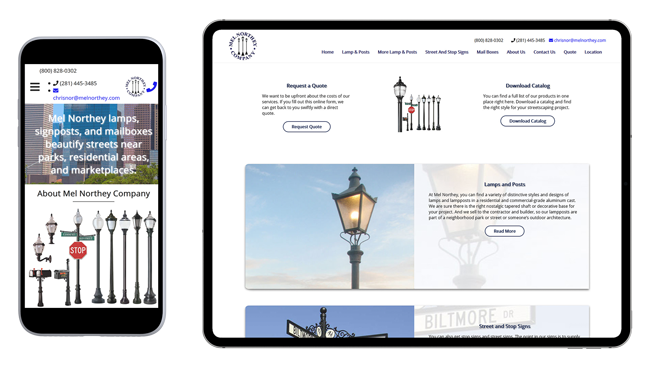
This medium-sized website demonstrates how buyers select fixtures and signage by browsing categories, examining key specifications, and requesting quotes. Category hubs organize luminaires, poles/arms, and signs; each product page presents essential details such as dimensions, materials/finishes, mounting options, and ordering notes, all openly displayed. Quick access links to the contact and quote forms are available on every page, and location information is straightforward for North American visitors to find. Overall, the site provides a more seamless experience from discovery to specification and quotation, reducing the number of clicks and clarifying the information hierarchy.
Website Details

  • Buyer flow: Category browsing → Product spec review → Quote request.
  • Category hubs: Luminaires, poles/arms, and signs grouped with short intros.
  • Product focus: Dimensions, materials/finishes, mounting, and ordering notes highlighted up front.
  • Persistent actions: Contact and quote links surfaced on every page.
  • Location cues: North America–ready contact and location info kept close to CTAs.

How It Was Built

  • Information architecture: Navigation and page hierarchy aligned with the sourcing flow (Category → Product → Quote). Category hubs serve as wayfinding anchors; internal links smoothly direct visitors between related products and the quote form, minimizing back-and-forth.
  • Reusable components: Modular blocks for category intros, spec callouts, comparison tables, galleries, FAQs, and CTA bars ensure consistent product pages and make updates easy as the catalog grows.
  • Specification clarity: Product templates highlight scannable fields—dimensions, materials/finishes, mounting options, and ordering notes—so buyers can verify fit without opening PDFs or hunting for details.
  • Performance baseline: Responsively sized images, modern formats, and limited scripting on product lists and detail pages enable quick scrolling and easy tap-to-quote on mobile.
  • Accessibility check: Semantic headings, logical tab order, keyboard-accessible CTAs, and contrast checks for spec tables support fast scanning and comparison.
  • SEO fundamentals: Clear title/H1 pairs, concise meta summaries, and internal links between category hubs and product details bolster topical clusters and facilitate crawling.
  • Measurement: Events track spec interactions (e.g., table toggles), quote button clicks, contact form starts, and location lookups to understand buyer decisions and inform future catalog focus.