
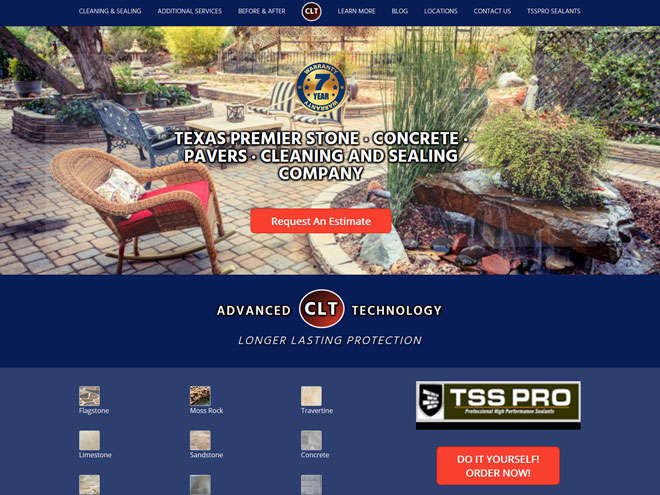
Stone Restauration

A statewide stone-care experience that preserves the original visual identity while improving visitor flow throughout the site. Services are organized into clear, easy-to-scan sections with straightforward headings and concise summaries, making options instantly recognizable. Location details are positioned near related actions, and prominent prompts to request an estimate or book a service are clearly visible on both mobile and desktop platforms.

About Website

This medium-sized website was redesigned to maintain its recognizable visual style while enhancing its structure and flow. Services are clearly explained with simple steps, and location pages make it easy to check coverage, including the Houston headquarters and six locations in Texas. Contact options—for estimates, scheduling, or calls—are constantly visible on main pages, reducing the number of clicks needed from discovery to booking. The overall result is a smoother experience, from identifying a stone-care need to confirming an appointment, all while preserving the current brand appearance.

Under the hood, reusable components, lighter media, and clear typography improve readability and load feel, while event tracking on key actions confirms the path from interest to scheduled work. The result is a familiar-looking site that behaves faster, feels clearer, and scales cleanly as new markets or services are added.
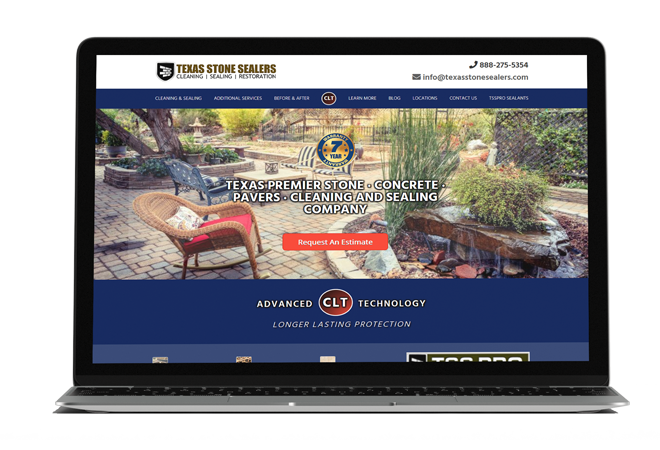
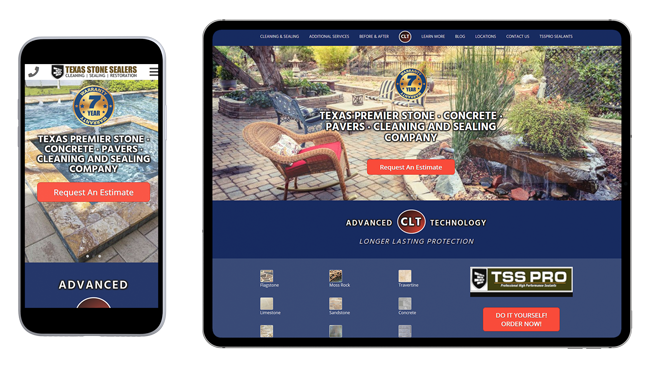
Website Details

  •  Brand preserved: Maintains existing visual style; improves structure and clarity.
  • Service clarity: Uses straightforward descriptions and outlines the next steps for each service.
  • Coverage: Displays Houston HQ and six Texas locations with hours and contact info.
  • Persistent CTAs: Shows options for estimate, schedule, and call, where decisions are made.
  • Proof assets: Features a gallery of before-and-after images and brief FAQs near CTAs.

How It Was Built

  • Information architecture: Simplified navigation and page hierarchy centered around decision flow (Service → Location → Action). Consistent labels and internal links help prevent dead ends.
  • Reusable components: Modular sections for service overviews, FAQs, proof/gallery, CTA bars, and location blocks ensure a consistent layout and quick updates.
  • Performance baseline: Optimized media (responsive sizes, modern formats) and deferred non-critical assets to enhance mobile load times and scrolling.
  • Accessibility review: Semantic headings, logical focus order, keyboard-accessible CTAs, and contrast standards applied to interactive elements.
  • SEO fundamentals: Clear title/H1 pairs, intent-focused copy, location signals, and internal linking rules connecting services and city pages.
  • Metrics: Events for estimate requests, schedule clicks, phone taps, and location interactions to verify the new flow and inform future improvements.