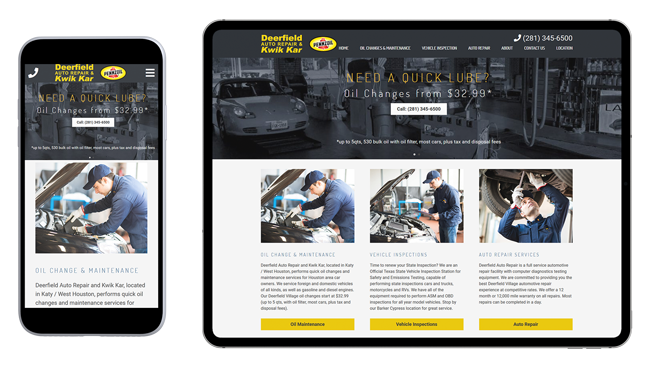
Auto Repair Shop

A small, localized site designed for quick decision-making and easy access to next steps. Essential actions such as calling, booking, and getting directions remain prominent throughout the user experience.

About Website

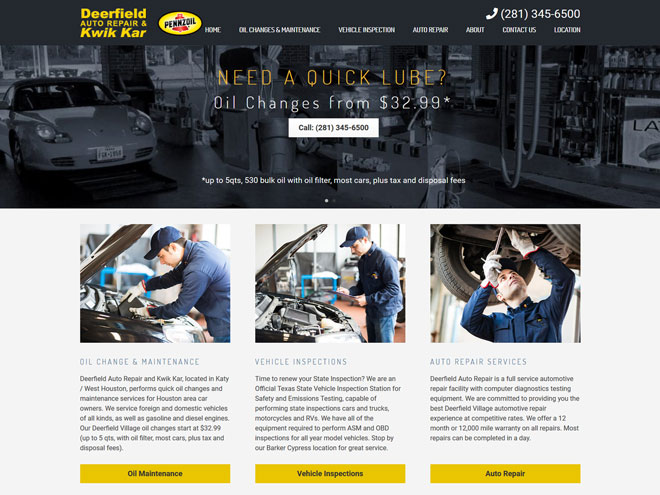
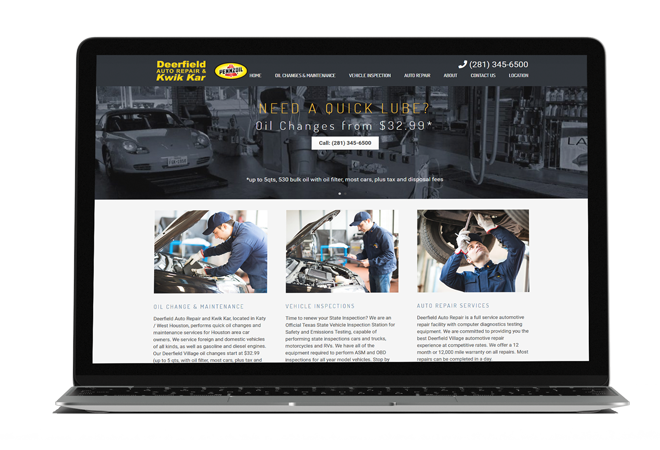
This update reorganizes a small local site to emphasize key customer decision points: starting with the service, then the location, and finally the action. Service pages for oil changes, inspections, and brakes clearly explain what’s included and how to schedule. The location page displays hours, features a map, and highlights nearby communities like Deerfield Village, Bear Creek, and Langham Creek for convenience. Calls to action (call or book) are consistently visible, and information about warranties, same-day repairs, and tow or rental options is easily accessible. Overall, this provides a faster, clearer journey from search to service.
Website Details

  • Service-first flow: Service → Location → Action to reduce steps to booking.
  • Clear service pages: What’s included, typical timing, and how to schedule.
  • Location clarity: Hours, map, and communities served presented together.
  • Persistent CTAs: Call or book options surfaced across key pages.
  • Trust cues: Warranties, same-day repairs, and tow/rental information made obvious.

How It Was Built

  • Information Architecture: Reorganized navigation and page hierarchy around the decision flow (Service → Location → Action). Established consistent labels and internal links so users can navigate between services and the location page without dead ends.
  • Reusable Components: Created a small component library (hero, service highlights, FAQs, trust badges, CTA bar, location block) to maintain content consistency and facilitate easy updates across pages.
  • Performance Baseline: Optimized media and critical rendering path to cut page size and enhance mobile load experience. Implemented lazy-loading for below-the-fold assets and minimized third-party overhead.
  • Accessibility Pass: Ensured a logical heading structure, keyboard-accessible CTAs, and sufficient color contrast for important text and buttons.
  • SEO primitives: Use clear H1/title pairs, simple URL structures, and internal link rules between services and the location hub. Add descriptive alt text to key images and ensure contact information is easy for crawlers and users to interpret.
  • Measurement: Track essential wired analytics events for phone clicks, booking actions, and key CTA interactions to verify that the new flow shortens the route from landing to appointment.