
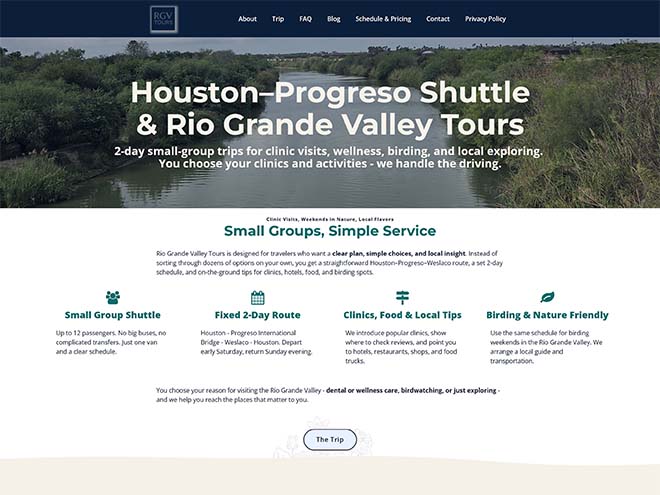
Shuttle Tours

Shuttle-based trips to the Rio Grande Valley for birding, food/exploring, and clinic/wellness. Clear 2–3-day outlines, pickup details, and quick actions—ask dates, hold seats, or request a custom itinerary—make the path from idea to reservation straightforward.

About Website

This site shows shuttle trips based on travelers' preferences: select a trip type (Birding, Food & Exploring, Clinic & Wellness), review a short 2–3-day itinerary, then confirm pickups and what’s included before booking. Each trip page features key stops and time frames, along with important details—pricing, seat requests, policies, and contact options—that are easy to find. The layout minimizes back-and-forth: visitors can go from curiosity to “Hold seats” or “Ask dates” in just a few simple steps.
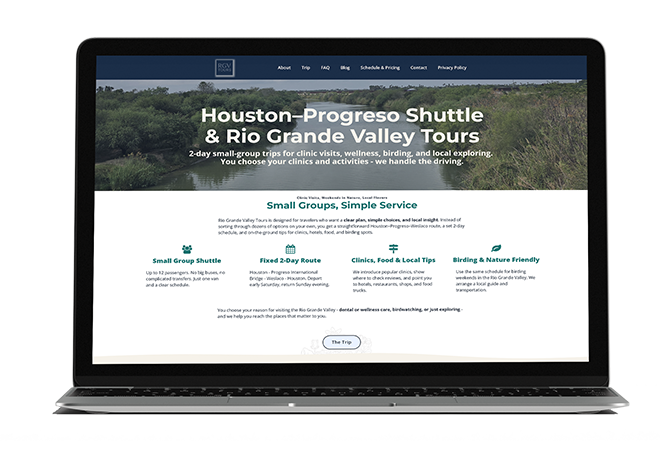
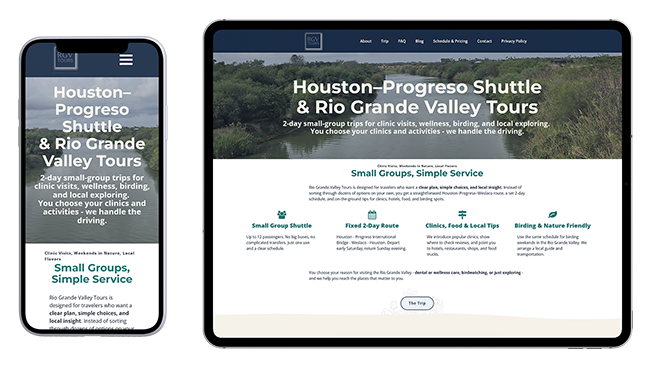
Website Details

  • Decision path: Choose trip type → Preview 2–3-day plan → Confirm pickup → Reserve.
  • Trip outlines: Plain-language schedules with highlights, inclusions, and optional add-ons.
  • Pickup clarity: Windows, maps, and contact steps presented before commitment.
  • Persistent actions: “Ask dates,” “Hold seats,” remain visible on desktop and mobile.
  • Policies in context: Luggage, cancellations, and timing notes placed near CTAs to reduce friction.
  • Media choices: Lightweight gallery strips that show key moments without slowing the page.

How It Was Built

  • Information architecture: Navigation and page hierarchy aligned with traveler flow (Trip Type → Itinerary → Reserve). City/region content (e.g., Houston/Austin departures) directly links to relevant trip pages and CTAs to prevent dead ends.
  • Reusable components: Trip cards, inclusion checklists, pickup blocks, schedule tables, gallery strips, FAQs, and CTA bars ensure consistency and allow for quick updates as dates and routes change.
  • Performance baseline: Optimized hero and gallery media, responsive image sizes, and restrained scripts for maps and schedules to ensure smooth mobile load times and scrolling.
  • Accessibility review: Semantic headings, predictable focus order, keyboard-accessible CTAs, and descriptive alt text for route images and key landmarks.
  • SEO fundamentals: Clear titles and H1s, intent-driven copy blocks (trip type, region, season), and internal links between trip pages, policies, and pickup info to strengthen travel clusters.
  • Measurement: Track events for “Ask dates,” “Hold seats,” phone and email taps, and policy views to enable adjustments to itinerary and CTA placement based on real data.